
Saturday, May 1, 2010

A Report of the World Sommelier Competition in Chile

Gérard Basset, until now the only holder of the combined titles of Master Sommelier, Master of Wine and Wine MBA of the world, was undisputedly the great favourite of the public for the “World Sommelier Competition”, event held in Chile from the 10th to the 16th of April.
Basset is a living legend, an example of overcoming adversity and perseverance. This sixth attempt would be his last one to obtain the coveted sceptre (in twenty years the only title he was yet to achieve) and according to the understood ones, this competition in Chile was the last opportunity to obtain it.

The challenge: seven difficult tests designed by a multicultural technical committee. His opponents did a great job, very technical, and some of them were more expressive or precise than others. But Basset was all that and more. He exuded charm and offered exceptional service - something that everyone admires in a champion Sommelier.

What Basset particularly impressed with was his answer to the question: “Define the profession of sommelier”. He was proud to answer that a sommelier first of all is a businessman, then, an inspiration for his team and finally, the important link of the chain that allows communication between the producer and the consumer.

The first test was to prepare the cocktail Negroni, he used a second table, like no other finalist. Then, also unlike his opponents, he served respective glasses of champagnes to the ladies first. And once again, making the difference, he closed the service by offering a bit more; alternatives of different finger foods go with the drinks, warmly suggesting that everyone could enjoy them if they were shared.

The second test consisted of matching a list of different wines with a respective plate. The list included: Champagne, Sake, Australian Riesling, Pinot Noir from Oregon, a South African Late Harvest and Argentinean Malbec.

The third test consisted of presenting and serving a Chilean Cabernet Sauvignon. Basset distinguished by the use of two decanters instead of only one. He also placed them next to a candle to see that they did not pass sediments to the glasses. He served a magnum bottle (1.5lt) of the Cabernet De Martino Single Vineyard.

The fourth test was to identify the errors in the wine list of a restaurant. An extremely complex test, in which it was difficult to find who got more right than wrong answers.

In the fifth test, with a time of 12 minutes [that Basset used perfectly], he continued being remarkable. It was the time for the feared blind tasting. Each answer has a detailed description including serving temperature, cellaring potential and pairing.

The sixth test, was less interesting for the public, but not less demanding. Each finalist had three minutes to identify each one of the eight distillates and liquors all poured in small glasses. Among them it was a malt whiskey, Chilean pisco, liquor of cinnamon, Vodka and Amarula.

The seventh test was to identify the name of the place to which five photographs corresponded. Basset once again was most accurate: of five, he guessed four.

The verdict of the technical committee was announced, number 33 was the new champion of the world. Basset was number 33, and took a step to the front to tremendous applause.
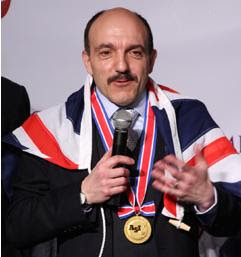
The night continued with speeches from the national authorities and the International Association of Sommeliers; the deserved gratefulness to the students of the School of Sommeliers of Chile who worked sunup to sundown offering a service of excellence at both lunch and dinner.

Also there were gifts for the Chilean Sommelier Association, presided by Héctor Vergara. And the most important gift of all was a collected donation of US$21,000 between all the members of the Sommelier Association, along with wines of the world for a future auction. Everything was collected with the purpose of contributing to the repair of damages caused by the earthquake on the 27 of February.

*** Most of information is from the Article:" Inglaterra Campeon" by Mariana Martinez, of the website http://www.planetavino.com/ . Translated and Summarized by DSC

Saturday, April 24, 2010

Guayacán, The First Premium Beer of the Elqui Valley

Guayacán brewery was created by 3 friends who met each other when they studied Agronomy, in the Pontifical Catholic University of Chile. After that period of time, they traveled around the world with different motivations, returning back home to work in companies related with the Fruit & Wine Industry.

On my last trip to Chile I went to visit my friend Cristobal (one of the 3) and his partner Pata at Guayacan, both enthusiastic people, with passion for what they are doing. I tried all their beers and I gave them my opinion about them. There is a lot that can be done still with Guayacan, but what they’ve already achieved is sensational, the first premium brewery in the Elqui Valley.

It was in 2008 when they decided to establish Guayacán Brewery (http://www.cervezaguayan.cl/). They are based in the North of Chile, specifically in the IV Region of Coquimbo.

From the beginning of this adventure Cristobal, Andres and Victor have a common vision :

-To form a unique and innovating project, that is the first beer of the Elqui Valley.

-To use one of best waters of Chile in the production, since water is the essence of a good beer.
-To take advantage of the extensive hours of sunshine available in the Valley of Elqui and utilize it through solar panels.

-To encourage the development of a tourist circuit with the Wineries, Pisqueras and other companies of the area to promote the Elqui Valley and its products .

-To help put the town of Diaguitas "on the map". Diaguitas is named after the original indigenous population of this area. Their cultural traditions are a colourful and attractive drawcard.

-To generate work opportunities in the area.

-To contribute to the decentralization of Chile, creating new projects and opportunities outside Santiago.

After 1 year of endless work, Guayacan was opened on the 18th of September of 2009, on our Chilean National Day. The brewery intends to supply all the restaurants, hotels and bars of the Elqui Valley, La Serena, Coquimbo and Santiago.

I travelled from Santiago by road with my partner Fran. We enjoyed the "road trip experience" so much because it was more than 10 years ago since I was there, and my goodness, Chile is getting better and better !!!

The Elqui Valley is located approximately 500 km to the North of Santiago and runs from the City of La Serena towards the Andes Mountains, beside the Elqui River.

Travelling from La Serena the road goes through sectors of impressive attractions, such as:

The Puclaro dam, which covers a surface of 760 hectares. It supplies potable water and irrigation to valleys of the Elqui and offers excellent conditions for the practice of water sports like windsurfing and kitesurfing.

60 km to the east of La Serena city is Vicuña, with 300 clear sky days during the year. It is a great spot to see the stars. There are 3 international astronomical centres in the sector: Tololo, Gemini and Soar.

The town of Diaguitas, where the Guayacán Brewery is located, 8 km from Vicuña, is one of the most colourful places of the Elqui Valley and it is characterized by a series of houses made in the neo-colonial adobe style. It is located between the impressive Mamalluca hill and the Elqui River. There is a project to declare Diaguitas as National Monument.

The town of Pisco Elqui, at 1,247 meters above sea level, is a beautiful and colourful location that is visited by tourists throughout the year and especially in the summer months. It has two “Pisqueras”, both recognized for the quality of their distilled spirit "Pisco", Chile's national spirit. It also boasts a great variety of restaurants, hotels and tourist activities . This little town is pretty much the Capital of the Elqui Valley.

We visited all these attractions and enjoyed very much the company of Cristobal and Pata. I invite you to visit Guayacan and the Elqui Valley. There are plenty of things to do and most activities are relatively close to each other. The exotic landscapes became part of your every day experience and you can feel so calm and relaxed in this amazing part of Chile.

Saturday, April 17, 2010

Walking with the Wizard


Alvaro Espinoza is one of Chile’s most widely recognized winemakers and has been part of many successful projects, including the introduction of biodynamic agriculture for winemaking grapes.

In 1998, while Alvaro was working in California, he met and worked with Alan York, a worldwide known Biodynamic Consultant. Alan gave him a book about Rudolf Steiner. This was a critical point of change for Alvaro – it utterly altered his views on nature.

Personally I am really interested in his methodologies and understanding more about the processes that are used by the many wineries that he consults to, both in Chile and other winemaking regions. I was lucky enough to organise an exclusive visit with him when I recently travelled to Chile. I was invited to meet him at “Los Robles” Farm, in the Colchagua valley. This is where “Emiliana”, the Chilean winery most recognised for its work with organic and biodynamic wines, is situated.


Click to see Interactive view of Emiliana Vineyard
( http//www.emiliana.cl/organic-biodynamic/interactive-vineyard/ )

This visit was definitely on of the highlights of my trip, without a doubt.

Alvaro has been the Consulting Winemaker of many wineries in Chile and in other wine countries. He has helped create the premium organic and biodynamic wines from the Casablanca, Maipo, and Colchagua Valleys, Chile’s most prestigious wine regions. Bottles like: GE, COYAM and ANTIYAL are part of his legacy.


As soon as I got there I said straight away that I wanted a to hear a summary of everything that he has done so far at the Emiliana winery. It seemed like a pretty big question but he gave me a great overview as well as a complete explanation of biodynamic techniques, with fantastic infectious enthusiasm.

As he explained we walked through the vineyards, and he told me quite a few stories, in his own particular style, and pointed out relevant examples as we went. He explained (in broad terms) his commitment to farming aimed at increasing biodiversity with a total absence of agrochemicals. It’s a great challenge I’m sure you can imagine. He said, “only someone who is already a good farmer can develop good biodynamic agriculture techniques”


He is visibly passionate about all that he is involved in. He believes that the prime objective of this type of agriculture is to produce healthier foods and restore biodiversity, as well as aiming to reverse the problems generated by conventional agriculture, such as soil degradation, desertification, pollution and contamination, the loss of genetic diversity, and the presence of toxic residues in the harvests - and that’s just for starters.


He also gave me great insight into how a vineyard can be genuinely self-sustaining, without the need for external chemicals or products. This isn’t a popular concept for corporations but it makes so much sense on a community level. Reducing our footprint on the planet, eradicating waste, and nurturing the correct balance of life.

In addition to their commercial crops they have also introduced of animals for fertilisers, wild flowers for insects, and a nursery for developing seedlings [both for food and biodynamic preparation] which overall further enhance the holistic nature of the farm. Interestingly they are also very involved on a community level, with children from local schools regularly visiting, and workers on the farm being allocated a half day a week of their working time to be able to develop food for their families, and sharing their knowledge and educating as far as possible.

I have to say that one of the most interesting points of the visit for me was when we went to the storage area of the biodynamics preparations. It had such a sense of medieval times, when it would really have been a wizard that collected all the ingredients and prepared the potions, and developed the plans for the development of the crops. It gave me a realisation of how much relevant knowledge is actually based in our history, and how worthwhile it is to learn more from the experiences of past generations.


Alvaro was happy to tell me all that he could about his world and I am so grateful to have had such a fantastic and educational experience at the farm, on a beautiful piece of land, in the piedmont of the Colchagua hills, close to Nancagua.


Alvaro’s knowledge opened my eyes and his passion added to my enthusiasm for the future. I hope that one day I can develop a property using his achievements as my guide to balance with nature, and produce wonderful results also.


He is known as “the moth” between his colleagues [university nickname] but I think that ‘The wizard’ might be more appropriate, because the scope of his knowledge in the area of biodynamics and the results of his efforts are nothing short of magical…

Posted by David Stevens-Castro

Friday, April 9, 2010

Who said Kross ??

I have to confess that lately I’ve being drinking quite a lot of Kross beer (http://www.kross.cl/kross.html ) in my spare time, and trust me, is really easy to do.

I went to visit their brewery few weeks ago while I was in Chile. Jose Tomas picked us up close to Curacavi, where the brewery is.

Why do I think Kross is so good?

-I love the packaging: Funky stuff !!!

-I love that every style of Kross beer: Golden Ale, Pilsener Lager , Stout and Kross 5 gives you a sweet finish in the palate, not bitterness like many others.

-Besides it is not just me who likes it, it has been awarded at the World Beer Championship Awards (US) and at the Australian Beer Awards.

Once at the Brewery we were 4 people, Jose Tomas Infante (General Manager) , Asbjorn Gerlach (the Brewer), Fran Flynn (my partner) and myself.

Asbjorn explained to us the process of making beer, the properties of the ingredients (hops + malt + yeast + water), and the key factors of the process plus how important the use of technology is to ensure consistent quality .

Asbjorn is a dynamic German man, who loves his beer and has more than 20 years of experience in the industry. It was such a pleasure to hear all his ideas in terms of beer making.

Jose Tomas is the man of the numbers. He is base in the office of Santiago City. After Asbjorn’s tutorial, Jose prepared a Kross tasting which we drunk pretty quickly.

It is obvious to see that everything is working nicely. They have a good team and they are in the process of doubling the capacity of production this year. At the moment they have got 2 brewers and 2 more people who are learning from them. Plus the infrastructure at the brewery is ready to receive lots of thirsty tourists.

Well, all I can say now is run and get a cold kross in your hand, you will love it !!!

Sunday, April 4, 2010

MOVI … Straight from the Wine Makers!!!

I’ve been following this exciting idea from the beginning, the people involved, their projects, and their careers.

Around October 2009 I got in contact by email with Felipe Garcia, a talented winemaker who was involved at Calina and Casas del Bosque wineries, as well as consulting Echeverria and Laura Hartwig. Now he is the face of MOVI (http://www.movi.cl/ ).

MOVI means Movement of Independent Vintners, sounds different, doesn’t it? Especially while at the same time the current trend is that big wineries are buying small wineries and big holding groups are swallowing different wineries all over the place.


MOVI seems to me as a dream of enthusiastic people who believes in wine as a simple expression, personal ideas making personal wines, what is know in the wine world as the “Garage Wineries”.

Some growers of MOVI are bigger than others, but in essence they have the same thought, make the wine accessible, to the point that you can talk with the person who made it, and understand what he enjoys about it and what is the message behind the bottle.

Felipe and his wife Constanza are Bravado Wines, and they invited us to have dinner and enjoy a MOVI wine tasting at his place, He cooked a beautiful big shank of meat and between laughs we shared a bit of our lives and enjoyed some great wines.

We tried 18 bottles and I am happy to tell you a bit about them:

Marina Bravado Wines Sauvignon Blanc Casablanca Valley
Bright Greenish colour with a bell pepper nose, became citric over time, I really enjoyed the acidity and the weight in middle palate. Worth a try.
Aylin Sauvignon Blanc, Leyda-San Antonio Valley
Pale and clear in the glass, crispy nose of fresh green apples, great acidity. I love Leyda!!!
Grande Reserve Clos Andino Chardonnay, Casablanca Valley
Yellow colour and a nose full of nuts, is a super friendly wine with a light body that makes it as drinkable as juice.

Trabun Syrah Trabun Estate, Cachapoal Valley
Great artwork on the bottle, red fruit and hint of smoke, it’s not perfect but looks funky.
I latina Syrah Latina Estate, Cachapoal Valley
Dark purple colour, vibrant fresh fruit, spicy and with great stucture. It is a wine that invites you to drink the whole bottle in one go.
Polkura Syrah, Marchigue, Colchagua Valley
Dark colour, nose of black cherry and a tiny bit of blackberry. In the mouth it offers an underlying earthiness and leathery flavours but nothing to drive you crazy. Is got a short finish.
Polkura "Block G1" Syrah, Colchagua Valley
Inky colour, there is more work in this one than the last one, this wine has a firm nose of blackberry and cassis. In the mouth it is rich and broad with velvety tannins and a long finish.
Emocion Starry Night Reserva Pinot Noir, Maipo Valley
very friendly wine displayss cherries and a tiny bit of ceddar. Perfect every day one, I really enjoy this one because it is simple and direct.
Clos Andino Cabernet Sauvignon Grande Reserve, Cachapoal Valley
Medium dark colour, has a sweet nose of cherry and chocolate. In the mouth it offers a long finish.
Hacedor de Mundos Cabernet Franc Reserva Gillmore, Loncomilla Valley
Great Label design. If you like sharp tannins, this is your variety. Green notes that reminds me of eucalyptus, which is property of the variety, is quite fresh and it can live for ages in the bottle. Worth a try.
# 19 Cabernet Franc Garage Wine Co. , Maipo Valley
Pale red colour, pepper and raspberries up front follow by a leafy note, it is fresh with a firm tannin. I have to get used to this variety.
Golden Breast Syrah/Malbec/Cab Sav/Cab Franc Rukumilla , Maipo Valley
A Blend with lots of different aspects to look at. It is quite earthy, the fruit is there but not really clean, I think will get better with time. I would love to try it again in 6 months.
Reserva Flaherty Syrah/Cab Sauvignon, Aconcagua Valley
Dark garnet in colour, this wine has a nose of barnyard, cedar, and dried cherries. In the mouth it offers dried cherry fruit, light tannins and a dirt and leather sort of flavour as the wine finishes.

# 18 Garage Wine Co. Cabernet Sauvignon/Carignan , Maipo Valley
Dark garnet in the glass, this wine smells of gamey meat, berries, and cassis. In the mouth it offers cedar flavours with lightly bitter, faint tannins that linger into the finish.
Erasmo Cabernet Sav/Merlot/Cabernet Franc Caliboro, Maule Valley
Medium dark colour has a nose of mixed fresh herbs, and cherries. In the mouth is got some sour cherry and raspberry flavours. Good acidity balances with sharp tannins, moderate finish.
Facundo Carignan/Cabernet Sauvignon/Petit Verdot Bravado Wines, Chile.
Purple colour. Close spicy nose. Is got some nerve going on in the palate. I would like to try it again in 6 more months, It needs some time in the bottle, but I can see where this wine is heading. An interesting blend. Great for cellaring.
Cobre Gran Reserve Gillmore, Loncomilla Valley
Medium dark colour. Nose of Cherry and Cedar. In the mouth it offers darkly complex flavours of cherries, tobacco, and wood. Nice acidity with a lovely earthiness. I can’t believe that this is a 2003 vintage. Great cellaring potential.

Thursday, April 1, 2010

Top Chilean Winemakers, " The Ultimate Tasting "

Hi there,

I was really looking forward to this occasion. Finally I was able to host a wine tasting of the ‘Top Winemakers’ bicentenary selection for my family.

In the past I have given you some information about this unique project ( To see it click :http://wineswithchile.blogspot.com/2009/08/top-winemakers-2010.html). In summary it is the ultimate expression of our winemaking, the 10 most renowned winemakers of the Chilean Wine Industry come together to each create a unique bottle of Cabernet Sauvignon, our most awarded grape variety, followed by Carmenere, the most fashionable nowadays.

Rafael Prieto and Irene Paiva are the organizers of this project, and I have to say, thanks for the great effort and the experience. As a Industry these things are very necessary. We are a wine country with character and we have to share it. From its origin wine is being made to celebrate and to enjoy as an experience of sharing.


‘Top Winemakers’ is made with the intention of celebrating Chile's 200 years of Independence, and certainly, it is a great gift for all wine lovers out there.

Lets have a look at my wine notes. I’ve divided the tasting in 3 sections, to create a structure to the tasting.

More Cabernet than anything else

Ignacio Recabarren, winemaker of Concha y Toro Winery.

Blend: 93% Cabernet Maipo Alto / 2% Cabernet of Pirque / 2% Cabernet franc of Maipo Alto /
2% Carmenère,Peumo, Cachapoal.

Tasting Notes
This is a wine with a perfect balance between the powerful and the elegance of the Cabernet. A flashy wine with nice structure and firm tannins. Great cellar potential.

Cecilia Torres, Winemaker of Santa Rita winery.

Blend: 89% Cabernet de Maipo Alto / 7% Cabernet / 4% Syrah Alto Jahuel, Maipo.

Tasting Notes
This is a gentle and friendly Cabernet, soft tannins, red fruits, and a silky long finish. Ready to drink now.

Marcelo Retamal, Winemaker of De Martino winery.

Wine is a 100% Cabernet Maipo Alto.

Tasting Notes
The wine is very structured. It displays black fruits, with a very sweet and juicy palate. The aftertaste is very long and dark. So far one of my favourites of the tasting.

MultidimensionalBold

Pablo Morandé, Winemaker of Morandé winery.

Blend: 71% Cabernet Maipo Alto / 12% Cabernet San Bernardo Maipo / 8% Cabernet franc San Bernardo, Maipo / 5% Carignan Loncomilla, Maule / 4% Syrah Loncomilla, Maule

Tasting Notes
The nose has got very ripe black fruits, and it warms your face a bit. The tannins are firm and wild, the carignan component shows a strong and direct aftertaste, adding a great acidity, excellent now and even more interesting in a couple of years. This is in my top 3.

Aurelio Montes, Winemaker of Montes winery.

Blend: 70% Cabernet de Maipo Alto / 15 % Cabernet de Marchigüe, Colchagua / 15% Syrah Apalta, Colchagua.

Tasting Notes
Black and ripe fruit over the barrel makes this wine very friendly and fresh, oily and juicy and with a great structure. Is a wine in the style that Montes has been making in the last decade, quite successfully I have to say.


Adolfo Hurtado, Winemaker Cono Sur winery.

Blend: 70% Cabernet Maipo Alto / 1% de Cabernet Puente Alto / 8% de Syrah de San José, Maipo / 7% Carmenère de Peumo, Cachapoal / 4% Malbec de Peralillo, Colchagua.

Tasting Notes
Fruity and fresh, soft tannins up front and intense and meaty at the back of the palate. It is probably quite honest in the way that it illustrates his very recognisable winemaking style.

Andrés Ilabaca, Winemaker of Santa Rita winery.

Blend: 78% Cabernet Maipo Alto / 20% Cabernet franc / 2% de Cabernet Alto Jahuel, Maipo.

Tasting Notes
This is a wine that doesn’t show much from the beginning, it has got earthy notes but not an expressive nose, and firm tannins which are very alive. You can cellar this bottle for a long time.

A bit of everything

Alvaro Espinoza, Winemaker of Emiliana winery.

Blend: 70% Cabernet Maipo Alto / 5% Cabernet Los Morros, Maipo / 14,4 Syrah / 6.6% Carmenère / 3,2% merlot /0.8% mouverde de Los Robles, Colchagua.

Tasting Notes
Probably the most complex wine of the selection. Very black colour, nose of very ripe dark fruits, the palate is quite broad, covering different areas of it. The tannin structure is balanced and it is surprising the way it shows many aspects of the different varieties that the winemaker used. Is Not my personal favourite, but is definitely a super wine.

Enrique Tirado, Winemaker of Concha y Toro winery.

Blend: 76% Cabernet Maipo Alto / 15% Carmenère Peumo, Cachapoal / 7% Cabernet franc Puente Alto, Maipo Alto / 2% Syrah de Buin, Maipo.

Tasting Notes
This is a wine with a intense dark colour, smells of plums and blackberries, elegant and meaty, powerful but with a nice balance on the palate. A great wine to drink on a special occasion.

Marcelo Papa, Winemaker of Concha y Toro winery.

Blend: 70% Cabernet de Maipo Alto / 22% de Syrah de viñedos propios en Maipo Alto /
6% de Cabernet de Maipo Alto / 2 % de Carmenère de Peumo, Cachapoal.

Tasting Notes
Elegant and delicate in nose, fruity, juicy and fresh. It showed different facets as I let it breathe and I feel like I can drink it at any time. My favourite of the selection.


Friday, February 19, 2010

The Kross Family

The story of Kross Beer begins in 2003 and from the first day the main purpose was to brew a unique range of beers, beers with global flavour , hand crafted from the very best available malt and hops in the market.

The Philosophy of this brewery is to brew in small batches, using natural ingredients like crystal water from the Curacavi Valley, premium malts from the Southern Chile and selected hops from around the world. No preservatives or additives are used in the process of Kross Beer.
In 2006 was inaugurated the new state brewery in Curacavi. 45 km. west from Santiago with a tank capacity of 60.000 lts. per month.

The combination of quality ingredients and care taken by this professional brewery team has being recognized in reknown international awards such as the World Beer Championship in the U.S and the Australian International Beer Awards.

Kross Golden Ale


Kross Golden Ale is an all malt beer, brewed from a blend of Pale and Crystal malts, lendind this beer its unique golden colour an warm, tasted flavour.


The subtle bitterness is due to Horizon hops added early in the boil, while a late addition of Cascade and Glacier Hops provides fresh, citrus-like aromas.

Keeping the tradition of the Ale style, the brewer use a unique top fermenting yeast which develops a complex, yet smooth and balanced flavour

Kross Pilsner


Kross Pilsner is brewed true to style, deriving its pale golden colour from the use of premium Chilean Pale and Crystal malts.

It's subtle bitterness is comes from the usea of Horizon hops early in the boil, while a generous late addition of Mount Hood and Saaz hops provides the fresh spicy aroma.


Is the perfect food pairing for an aperitif with light cheese or sushi. Accentuates the flavour of herbs and spices used in different foods.


Kross 5
Kross 5 combines all the specialty malts and hops varieties that the brewery use to create the normal range of beers.

On the top the brewer decided to age this strong ale in contact with toasted blocks of American oak, which lend the beer and incredible smoothness and add vanilla, coconut and whiskey barrel aromas to the intense malt flavours already present.


The packaging is a coloured champagne bottle of 750ml. enjoy this piece of art.


Kross Stout

Kross Stout is the version of the traditional " Swet Stout " style.

A mix of special Patagonian pale and roasted malts imparts complex flavours of dark chocolate, toffee and roasted coffee, as well as a deep ruby-red colour.

Original East Kent Golding hops are used twice during the boil, complementing the roasted flavours with a subtle bitterness.

If you want to try them, let me know by email: david@winesofchile.com.au.

Cheers.

DSC.

Related Posts with Thumbnails